A few simple steps each month keep a stainless steel gate cleaner, less scratched and much longer-lasting. A detailed guide for households.
Stainless steel being "stainless" does not mean it needs no care. Dust, rainwater, salty air and grease left for a long time can still leave the surface yellowed or marked. Below is a stainless steel gate maintenance routine that any household can follow.
Suggested frequency
- Light dusting: every 1 to 2 weeks with a soft damp cloth.
- Thorough cleaning: every 1 to 3 months, depending on whether the gate is right on a main road or in an alley.
- Checking hinges, tracks and locks: every 3 to 6 months.
Near busy roads or in damp areas, do it more often.
Tools to prepare
- A microfiber or soft cotton cloth.
- Clean water, diluted dish soap or mild soap.
- Diluted white vinegar (for water deposits and light stains).
- Lubricating oil for hinges and tracks.
Avoid steel wool, wire scouring pads and coarse sandpaper, because they leave scratches and iron particles that can cause surface rust.
Cleaning steps
- Wet the surface with clean water to wash off dust and sand, so you do not drag grit and scratch it.
- Wipe with a mild soap solution, following the grain on hairline stainless steel, or in one even direction on polished stainless steel.
- Rinse with clean water, and do not let soap dry on the surface.
- Dry immediately with a soft cloth so no water marks remain.
- Light stains: wipe with diluted white vinegar, leave for a few minutes and rinse clean.
Handling common situations
- Grease and fingerprints: use dish soap and dry.
- Small rust spots: usually caused by iron dust from elsewhere (when someone grinds steel near the gate). Wipe with a stainless steel rust remover, following the instructions on the package.
- Shallow scratches: can be re-dressed with a fine scouring pad made for stainless steel, along the grain; deep ones should be left to the workshop.
- Lime and cement splashes when the neighbors build or renovate: wipe early before they harden.
What to avoid
- Do not apply chlorine-based cleaners (bleach) directly on stainless steel, because chlorine can cause pitting.
- Do not let ordinary metal objects lean on the gate, especially outdoors in damp conditions.
- Do not use car wash products that are strongly acidic.
Lubricate and check the mechanism
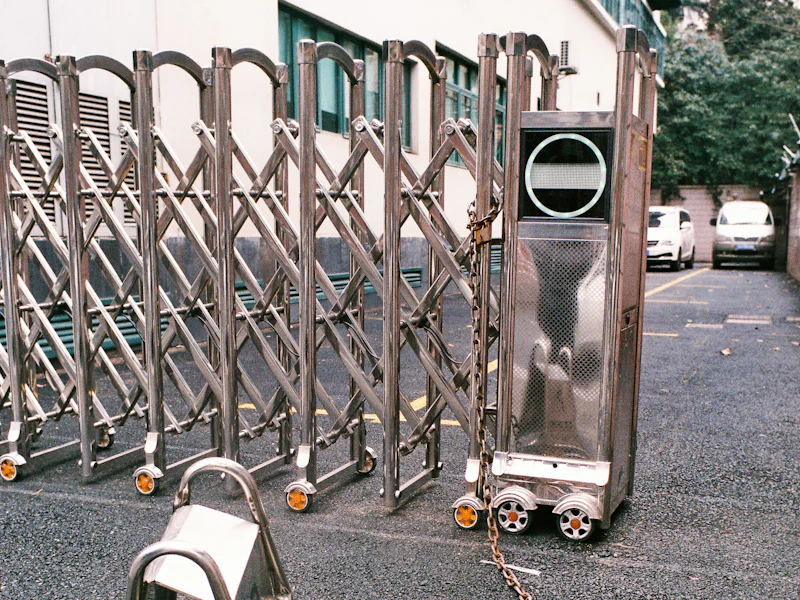
For sliding gates with tracks and wheels, clear dust and dirt from the track groove, check that the wheels still roll smoothly, then put lubricating oil into the bearings. For swing gates, check whether the hinges are loose. Tightening loose points early prevents major damage.
When to call the workshop
If a weld cracks, a hinge sags, the gate leaf scrapes the ground or many rust spots spread, contact the workshop for an inspection. Early treatment is usually simpler and cheaper than waiting.
- #bảo dưỡng
- #cổng inox
- #vệ sinh