Principles for arranging exhaust fans and vents to make a metal-roofed factory less hot: fans high, intake low, a cross-flow of air.
Metal-roofed factories in the Mekong Delta are hottest at noon and in the afternoon. Many factories add a few more fans and still feel stuffy. The cause is usually not the number of fans but how the airflow is arranged.
Understand how hot air moves
Hot air is lighter and rises, collecting under the roof. To cool a factory, we need to expel this mass of hot air and bring cool outside air in at a low level, where the workers are.
Principle 1: extract high, intake low
- Exhaust fans (or roof fans) are placed high, close to the roof or the gable end.
- Air intake vents, such as louver vents, are placed low on the opposite side.
When the fans push hot air out, fresh air is drawn in from the low vents, creating a flow of air across the work area.
Principle 2: create a continuous cross-flow
Place the fans on one wall and the vents on the opposite wall so air passes along the whole length or width of the factory. If both are on the same side, air tends to circulate only near the openings. For a long factory, you can divide it into several groups of fans and vents along its length.
Principle 3: do not lack make-up air
If the fans are very strong but the openings are sealed, the fans only make noise. The area of the intake vents should be proportional to the total airflow of the fans. If the vents are too small, the fans must pull through a narrow gap, so airflow is weak and electricity is wasted.
Choosing fan types for the factory
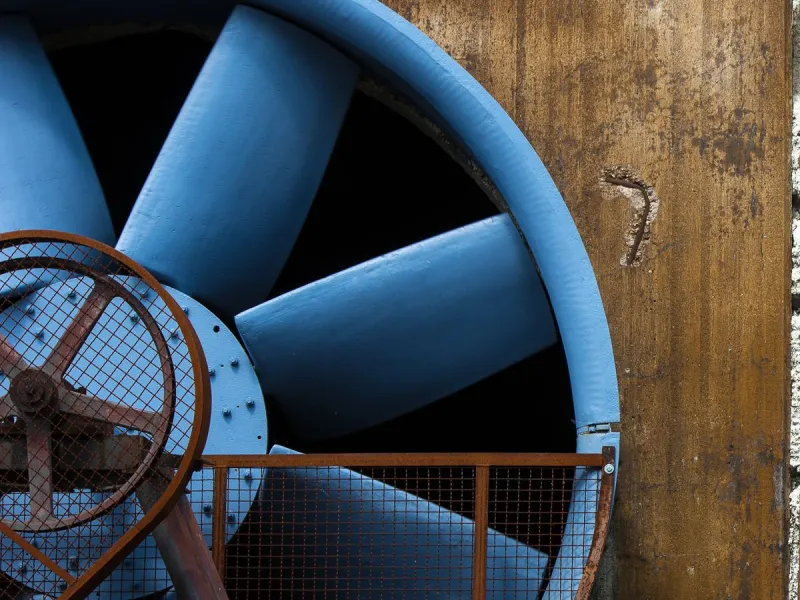
- Wall-mounted square exhaust fans (sizes such as 1380x1380): high airflow, common for large factories.
- Roof-mounted exhaust fans: release hot air directly at the roof ridge without cutting into walls.
- Round industrial fans with 600 mm blades or larger: flexible for small workshops and warehouses.
Look at the airflow given in each type's catalogue, and work out the number by multiplying the factory volume by the number of air changes you want. Treat the numbers only as an initial reference.
Material: stainless steel or painted steel
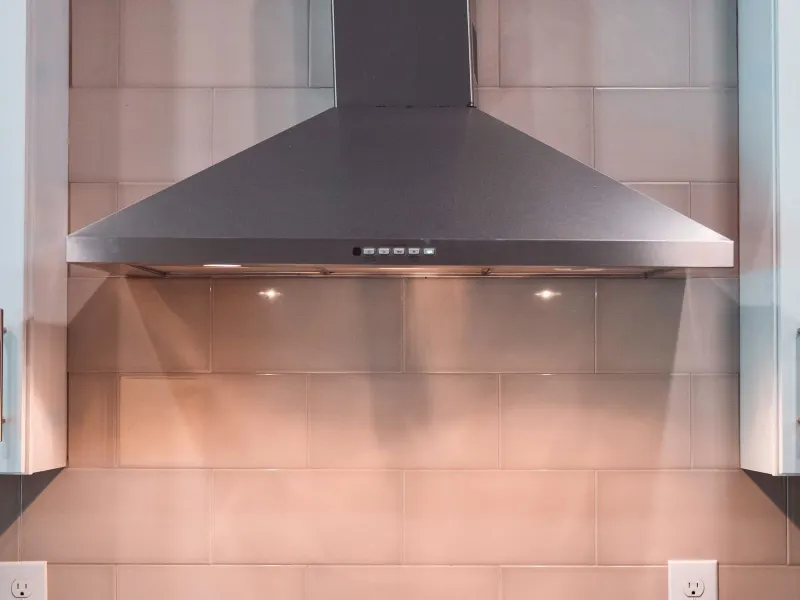
Food processing plants, seafood plants and places that are washed down often should choose stainless steel for the fan housing and frame so it does not rust. A dry machine workshop can use 201 stainless steel to save money. Louver vents should be stainless steel because they face sun and rain constantly.
Small but useful things
- Add insect and bird screens at the vents.
- Sweep dust off the fan blades periodically, since dust reduces efficiency.
- Use heat-reflective paint or install insulation under the roof together with ventilation to reduce accumulated heat.
- Check belts and bearings according to the maintenance schedule.
An example layout
A factory 40 m long and 15 m wide: install a row of fans on the gable end at the downwind end and a row of louver vents on the other gable end. Space each row evenly so air is distributed evenly across the width of the factory. This is only an illustrative example; the exact number and positions must be worked out for the actual site.
Contact the workshop
The Phu Phong workshop fabricates fan frames, louver vents and rain hoods in stainless steel, and also installs complete packages for factories in An Giang. Call us so the workshop can survey for free, propose suitable positions for fans and vents, and give a transparent quote stating the materials and dimensions.
- #nha-xuong
- #thong-gio
- #giam-nong