Four questions to answer before buying an industrial exhaust fan: how much air you need to extract, where it goes, what the environment is like and which material to choose.
An industrial exhaust fan is a simple piece of equipment, but choose wrongly and it wastes electricity, makes noise, and the air still does not move out. This article walks you through the steps of choosing a fan for a factory, warehouse or kitchen before you call the workshop for a quote.
Step 1: work out how much air you need to extract
The most important fan specification is airflow, measured in m³/h. A reference way to calculate: take the volume of the space (length x width x height) and multiply by the number of air changes per hour you want to achieve.
- Dry, airy warehouses and workshops: fewer air changes.
- Workshops with heat (welding, drying, processing): need more air changes.
- Restaurant and canteen kitchens: need the most, and should be calculated separately by the hood (see the article on calculating airflow for kitchens).
Specific numbers depend on each site, so treat this as a reference and let a technician survey in person.
Step 2: choose the fan type
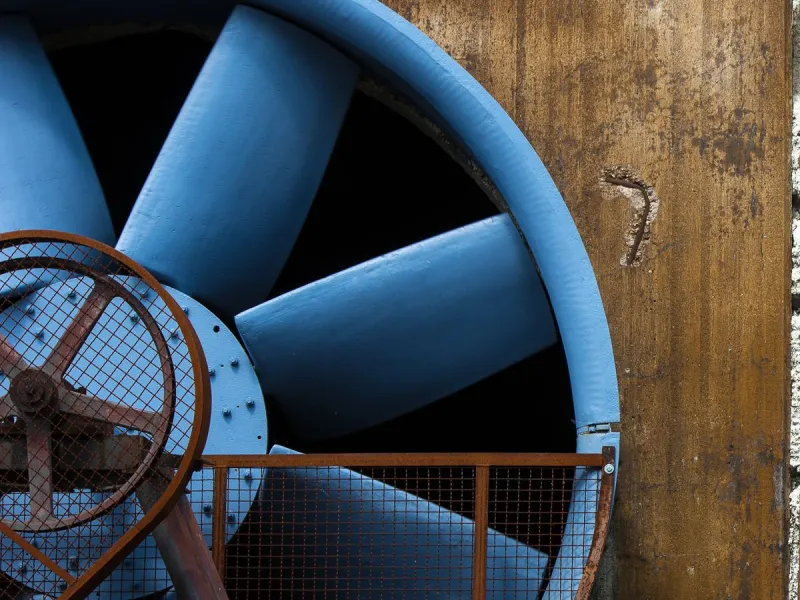
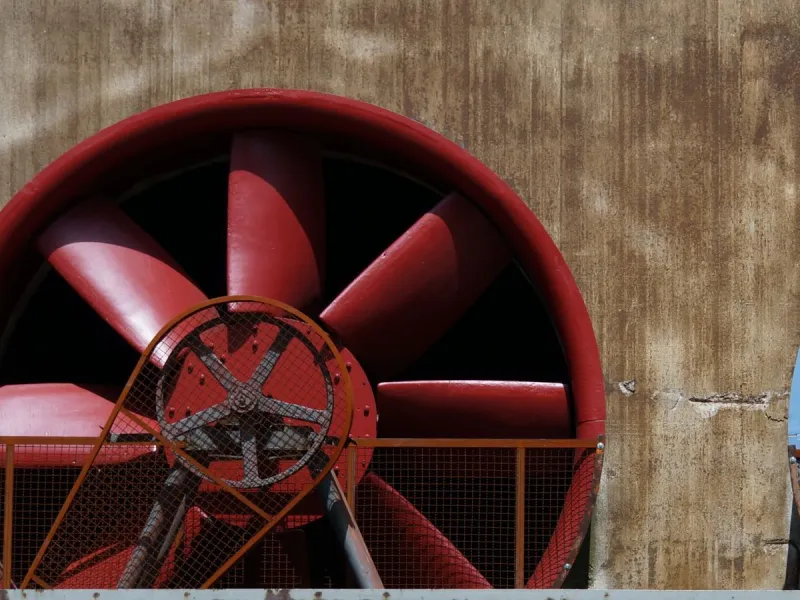
Axial fans have rotating blades that blow air straight through the wall opening. High airflow, a comfortable price, suited to factories and livestock barns. The drawback is that they move a lot of air but are weak when pushing through long ducts.
Centrifugal fans draw along the axis and blow out at 90 degrees. Higher static pressure, suited when there are long ducts, many elbows, or grease filters as in restaurant kitchens.
Roof fans release hot air from the roof, suited to metal-roofed factories.
A simple rule: if the air goes straight out through a wall, use axial; if it must go through ducts and filters, use centrifugal.
Step 3: consider the working environment
Choose the material according to where the fan will sit:
- Dry places with little corrosive vapor: a 201 stainless steel or painted steel housing is enough.
- Damp places that are washed down often, with salt or ammonia vapor, such as livestock barns and seafood plants: use 304 stainless steel.
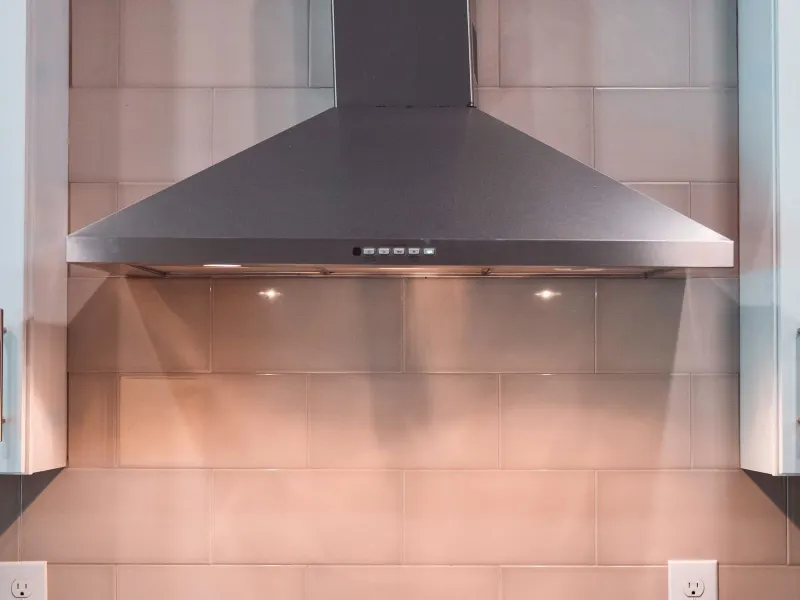
- Places with grease and heat such as kitchens: the blades and housing must withstand heat and be easy to wipe, so prefer 304 stainless steel.
Choosing a cheaper material at first but having to replace it after a year or two usually costs more.
Step 4: voltage and motor power
Small fans usually run on 220V single phase. Large fans (from about 0.75 kW up) usually use 380V three phase. Check the power supply at the site before choosing, because changing the supply after purchase adds cost.
Motor power is only part of it. Two fans with the same power but different blades will give different airflow, so ask for the airflow and static pressure in the catalogue, not just how many kW.
Step 5: plan the air path in and out
An exhaust fan is only effective when there is somewhere for new air to enter. Many factories install very powerful fans but close all the doors, with the result that the fan is loud and the air does not move. Principles:
- Place the exhaust fan high, on the side with heat or smoke.
- Place the air intake vent opposite, lower down, to create a flow of air across the space.
- Louver vents with rain-blocking blades let in air without rain blowing in.
A short checklist before contacting the workshop
- The dimensions of the space to be ventilated.
- The current situation: brick wall, metal roof or an existing vent opening.
- Power supply of 220V or 380V.
- Environment: dry, damp, greasy, chemicals or not.
- Expected budget.
With this information the workshop can advise faster and quote more closely. The Phu Phong workshop surveys on site for free in Long Xuyen and the neighboring districts of An Giang, then sends a quote stating the stainless steel type, dimensions and power. Prices are for reference only until an actual survey is done.
- #quat-hut
- #nha-xuong
- #kien-thuc